Showing posts with label wild bird feeders. Show all posts

Monday, 21 July 2014

Feeding birds in summer

Feeding the birds

Feeding birds used to be a winter activity, from Christmas until the first spring flowers appeared. But birds need our help in the summer months just as much as during the winter.

Premium Grade Peanuts
Because birds breed in the spring and early summer, by July and August there are millions more hungry mouths to feed. For tits, finches and sparrows, garden feeding stations provide a real lifeline. And even for birds like robins, wrens, thrushes and blackbirds, availability of insects, fruits and berries is, to a large extent, the result of gardening habits. The more bird-friendly the garden, the more birds it will support.

As we and the birds enjoy the summer sunshine, autumn and winter (when food is more scarce) are only a couple of months away. If this year's youngsters and their parents can obtain enough energy now, they'll have the energy resources to survive leaner times ahead.

Natural food availability

Nesting parents have a particularly tough time in summer. The job of finding hundreds of caterpillars a day is hard work for a pair of blue tits, so any extra food to maintain their own energy levels is welcome. They may also have to cope with dry weather, when earthworms burrow deep beneath the surface; or in wet weather, when foraging is difficult.

Live Mealworms
In July and August, species like blackbirds and song thrushes often have second and even third broods. This means they have to find food for a new family at a time when their offspring from the first brood may also be struggling to survive.

Supplementary feeding

Just as in winter, high-energy food is the key to summer feeding. Live food is also recommended as it allows the adult birds to supplement the food they can find in the wild for their chicks, and also helps replenish their own low energy levels. It's best if you can avoid foods that might melt in hot weather, such as products containing lots of fat.

Premium Sunflower Hearts
Peanuts used to be the staple item on our bird feeding menu, but the increase in alternatives such as sunflower hearts means we now have a greater choice. Peanuts might spread aflatoxin, a fungal infection that can be lethal to birds. Check the pack before you buy to make sure the nuts have been tested for aflatoxin. Whatever you do, never put out nuts intended for human consumption, because they contain dangerous levels of salt.

What to feed birds

The following food can be fed to garden birds throughout the year:

  • Sunflower hearts are packed with energy, and are easier for birds to eat as they don't have a tough seed coat to crack open. They are also a cleaner alternative to whole sunflower seeds, as the birds don't have any seed coats to discard. 
  • Mealworms are the perfect summer dietry supplement. Lives ones are best but a dried alternative is available. 
  • Fruit is an excellent source of energy for ground-feeding birds like robins, thrushes and blackbirds. Raisins, sultanas, apples and pears are all suitable.
  • Many leftovers are ideal for feeding hungry birds. Cooked pasta and rice are high in energy, as is rind or fat from unsalted meat. You can also leave out cooked vegetables, pastry and grated cheese, but avoid salty food or bread, as this can be bad for birds.


Happy Birding!
Peter, Anne & The Team

Thursday, 8 May 2014

Bird Feeders

Sunflower bird seed is by far the most popular bird seed that attracts a large variety of wild birds. There are quite a few types and styles of Bird Feeders for sunflower seeds and most do a good job.

The Sunflower Seed Bird Feeder shown here is a wire mesh style that has internal dividers that keep the seed in the upper levels longer which results in more birds being able to feed at the same time. It also has a small tray to accommodate perching birds like Cardinals. Clinging birds like the Chickadee, Titmouse, Nuthatch and Woodpeckers like to cling to the wire mesh to feed.

Goldfinch Thistle seed bird feeders are the second most popular type of bird feeder. Thistle seed is tiny seeds that Goldfinches and others love. A good example of a thistle feeder is the yellow accented wire mesh feeder designed just for the thistle. This Finch Tube Bird Feeder has internal dividers to maintain seed in upper levels for longer use by many birds. Its tray catches fallen seed so the birds can still find and use it.

Peanut bird feeders can be added as an extra type of feeder to attract more unusual types of birds. The red Spiral Peanut Bird Feeder holds the peanuts in wire openings that are just right to allow birds to peck their treat out. This gives the opportunity to see these birds for a longer time. Red Belly Woodpeckers, Downy Woodpeckers, Hairy Woodpeckers, Nuthatches, etc. all frequent this type of feeder. The spiral arm gives them an extra perch that they like to go around on to find their choice peanut.

These are just a few examples of all the different styles available, more Bird Feeders can be seen here. Squirrel Baffles can be added to these bird feeders to have Squirrel Proof Bird Feeders.

Tuesday, 1 April 2014

Feeding Garden Birds This Spring

Feeding garden birds

The modern approach to garden bird feeding is to use a range of foods that support the specific nutritional requirements of a wide range of species over the course of a year. There is a scientific evidence highlighting the positive effects that the provision of supplementary food can have on birds. For example, the provision of supplementary food has been shown to improve overwinter survival in a number of species.

What foods should I provide?

Many garden birdwatchers provide black sunflower seeds and sunflower hearts as their staple foods. Alongside these, quality peanuts, nyjer seed and high-energy seed mixes are all greatly appreciated. There are other foods, e.g. sultanas (soak in water first) that are good for ground-feeding Blackbirds, while pinhead oats are ideal for fine-billed Dunnocks (but should not be left out in wet weather). Finely grated cheese and windfall apples can be very useful, particularly in the winter, while peanut cake (a mix of fats and peanut flour) will attract species like Long-tailed Tit. Fat smeared into cracks in tree bark will be found by Treecreepers and woodpeckers. Live foods, such as mealworms are readily taken by Robins, Blackbirds and Wrens.

Black sunflower seeds:

Black sunflower seed was introduced in the early 1990s and revolutionised bird feeding by providing a high energy food in a readily accessible form. Black sunflower seeds have thinner husks than the more traditional striped sunflower seeds and so are easily to split open. Black sunflower seeds are a favourite of Greenfinches and tits, though they may be shunned if sunflower hearts are available nearby. The downside of feeding these seeds is the pile of husks left below the feeder. Shop now for Black Sunflower Seeds >>>

Sunflower hearts:

Sunflower hearts are more expensive than black sunflower seeds but they have two advantages. First, the birds can feed more quickly because they do not have to remove the husk. Second, the lack of the husk means that there is no unsightly pile of husks left behind on the ground after the birds have had their fill. Shop now for Sunflower Hearts >>>

Seed mixes:

Seed mixes come in a vast range, differing in content and quality. Cheap mixes often have a high proportion of cereal. These larger grains are favoured by sparrows and pigeons. Better quality mixes have a lower cereal content and so are particularly suitable for finches and buntings. The best mixes are carefully balanced to cater for a range of species. Some now contain added suet pellets, fruit or pieces of mealworm. Shop now for Seed Mixes >>>

Peanuts:

Peanuts are high in oils and proteins and have been used for feeding birds form many decades. Always buy good quality peanuts from a reputable source and avoid any that show any signs of mould. Peanuts are best supplied behind a wire mesh so that a bird cannot take a whole peanut away. Keep you peanuts in a cool and dry environment and buy them in small quantities, so that they do not sit around for too long. Peanuts can be contaminated with a naturally occurring poison called aflatoxin. Shop now for Premium Peanuts >>>

Nyger:

Nyger, sometimes seen spelt nyjer or sold as 'thistle' seed, is a relatively new addition to the bird feeding market and it is one that initially found favour with Goldfinches - which seemed to like the small size of these seeds. Because these seeds are so small they have to be supplied in a specially adapted feeder. They are oil rich and ideal for birds with delicate bills. There is some suggestion that Goldfinches now favour sunflower hearts, only moving onto the nyger when competition on other feeders is great. However, this may just be a local effect. Shop now for Niger Seed >>>

Mealworms:

Mealworms are not worms but the larval stage of a beetle. It is the larvae of the Yellow Mealworm Tenebrio molitor that are used widely as food for wild birds, as well as captive birds, reptiles and amphibians. Another less common but similar species, the Dark Mealworm Tenebrio obscura is sometimes used, the larva being somewhat smaller in size. Shop now fore Mealworms >>>

How much to feed and when

Try to balance the amount of food that you provide against the number of birds coming in to feed. In this way you will avoid creating a surplus of food that might go off or attract unwanted visitors, such as rats. Good practice is to clear your bird table down each night, removing uneaten food and any droppings.
Feeding throughout the year is recommended by conservation organisations, as it is not just during the winter that birds are under stress. If you are going away on holiday, then reduce the amount of food provided in the days leading up to your departure so the birds don't find that their favoured resource has suddenly disappeared.

Kennedy Wild Bird Food stocks a wide range of bird food, bird seed & seed & nut feeders - all available online & delivered next day. Shop online now & get free delivery & save 5% with orders over £50

Friday, 7 March 2014

Spring Sale is extended through to April


We've extended our Spring Sale on Peanuts & Sunflower Hearts throughout March & April.
You can now buy 25kg of Economy Peanuts for just £39.99 & 25kg of Premium Sunflower Hearts for just £38.99
Follow the links above now to place your order or call the office on 01778 342665.
All orders over £50 qualify for a 5% discount so why not browse around our bird feeders & live bird feed to add to your order?

Wednesday, 22 January 2014

How to help wildlife though the winter months


For many in the UK, feeding garden wildlife has become a regular habit with the nation spending an estimated £200 million every year caring for just the birds. But what should be on the menu?
While gardens can naturally provide an abundance of fruits, seeds and insects, offering tit-bits means nature lovers can provide a nutritional boost during stressful times as well as enjoy watching wildlife from their window.
Although it's important to remember that the food you provide is only a supplement - and there are consequences to attracting wildlife to your garden - a few snacks could make a big difference in extreme weather or help to feed demanding young.
what to feed wild birds in winter (click to enlarge) what to feed wild birds in winter (click to enlarge)
Our gardens can attract a rich variety of birds and Tim Harrison, from the British Trust for Ornithology (BTO), advises a mixed menu to reflect different visitors' tastes.
As part of the team behind the charity's year-round Garden Birdwatch survey, Mr Harrison is very familiar with seasonal trends and says you should consider changing what you provide through the year.
"Basically, the thing you need to think about when providing different food for birds in your garden is that the reason why there are all these different species is because they all have slightly different requirements and they all have slightly different niches," explains Mr Harrison.
"They all feed in slightly different ways and by doing that it means they're not in direct competition with each other."
So certain species prefer hanging feeders while others enjoy their feasts on the floor. Likewise, different sizes of food suit different beaks, with tiny finches preferring fine seed while the thrush family favour fat worms.
There are a few things to avoid, particularly cooked oats which can dry and solidify around beaks, sugary treats which can negatively effect diets, and loose whole peanuts that can potentially choke chicks if fed whole by unwitting parents.
You should also pay some attention to where you provide food so you don't make it too easy for predators to pick off your visitors - positioning your feeding station near trees or bushes allows the animals to seek cover once they have some food.

TIP - Don't forget the water!

  • Make sure there is fresh water available year-round for birds that need a bath and a beverage
  • Break the ice on a frozen bird bath - a light plastic ball can help to keep the surface from freezing by moving around in the wind
  • In hot weather you can also pour some water in a shady spot at dusk to encourage worms to the surface for blackbirds and badgers alike

Monday, 21 October 2013

Protect your feathered friends on Bonfire Night

We have all been told of ways of protecting our cats and dogs on Bonfire Night, but what about our feathered friends who have no option but to be outside while they are surrounded by strange lights and loud noises.

While we can keep our pets tucked up inside in the warm away from the fireworks going off, it is vitally important that we take into consideration the potential dangers and harm we may cause to wild birds during the next couple of weeks.

One of the most common issues that occurs around this issue is from people building their bonfires too close to trees and nest boxes.

The issue here isn’t of fireworks actually harming birds physically, but is more to do with loud bangs happening close to where they are nesting that result in them having to move elsewhere.

This can be particularly harmful at this time of year as birds need to preserve as much energy as possible over the long cold nights that are fast approaching.

Monday, 14 October 2013

'Early birds' find worms for dinner - BBC Nature

We've just spotted this really interesting article about the feeding habits of wild birds on the BBC website and thought it would be good to share with you ...


Birds, such as great and blue tits, search for food in the morning but only return to eat it in late afternoon, scientists have found. The team believe the behaviour maximises their chances of avoiding predators during the day without starving to death overnight. Researchers from the University of Oxford tracked the birds' winter foraging movements using tiny tags.

All five of the studied species of songbirds behaved in the same way. The results are published in the Royal Society journal Biology Letters.

"Our results are important because they provide a new hypothesis for how animals forage," said Damien Farine, lead author from the University of Oxford.

"They suggest that animals integrate the different risks they face into one strategy that can be applied to satisfy both their need to avoid predation and avoid risk."

Scientists have been studying bird populations at Wytham Woods, Oxfordshire, UK since 1947. Finding food becomes more and more relevant towards the end of the winter when large sources of food, such as beech mast, have become depleted. The team knew from previous studies that, when the predation risk appears high, birds delay putting on fat until late in the day.

"In the 1970s, when there were almost no sparrowhawks, tits used to be much fatter [in winter], which helped them avoid the risk of starvation.

"When sparrowhawks returned [in greater numbers], the average body weight of great tits, for example, decreased," Mr Farine told BBC Nature.

According to Mr Farine these birds had shifted from a strategy of being fat, to a strategy where they delayed putting on fat until late in the day.

... please follow this link to read the full article ...

Kennedy Wild Bird Foods has a wide range of food, seeds & nuts for domestic and wild birds as well as  cat and dog food.

Tuesday, 8 October 2013

Bird Watching for Beginners


A lot of birders have their first eye-opening experience with the avian world in their own back gardens - and usually from a young age. It could have been a robin nibbling on the berries on a frosty morning, a nuthatch visiting the feeder or a beautiful goldfinch singing on a warm Spring day. Whatever the species was, it opened the door to a wonderful world of wild birds. Most of us found soon after that while getting a handle on "garden" birds was pretty easy, the birds encountered further afield are another story.

Many are unfamiliar, only offer fleeting glimpses, or identification is elusive because they look just too much like several other species. When you are just starting out with birdwatching, identifying all of the birds you come across can seem to be overwhelming. However, before you decide to limit your birding to the confines of your garden, keep in mind that even seasoned experts run into birds that they can’t put a name to. Some birds will be a mystery but with practice, you should learn to identify most of the birds you see.

For better bird identification, try these suggestions:

• Study the field guide: Don’t just flip through your trusty field guide, take time to study it on a regular basis. Try learning how to recognize different bird families first before focusing on the species. This provides the framework needed for easier identification and makes it easier to learn about the differences between similar groups like hawks and falcons or ducks and grebes. Once you have a good handle on the bird families in your region, then you can start studying the species in each of those families.

• Field marks: This refers to the diagnostic characters that help identify birds at the species level. Instead of memorizing every tiny aspect of each species, just focus on learning the field marks to start. This saves time and greatly simplifies bird identification.

• Practice in the field: Whether watching birds in the garden or looking at waterfowl at a local reserve, see if you can place the species you see in their respective families and look for the field marks pointed out in the book. If you know which family an unfamiliar bird belongs to, identifying it may just be a question of matching it to a species in the field guide. Practicing also means learning how to use your binoculars better and learning how to look for field marks like eyerings, wing bars, and other common features.

• Take notes and make sketches: These practices might be the best way to learn how to identify birds because you are forced to truly study the birds you see. Start by writing down notes that detail what you see on the bird. For example, if you begin with the head of the bird, write about the shape of its bill, markings around the eye and on the face, the colors shown by the plumage, and so on for the back, wings, tail, and underparts. Next, try drawing a picture of the bird you see and attempt to copy its shape and the field marks that stand out. It might seem like a painstaking process but you will learn a lot about field identification!

What has been helpful to you in learning how to identify birds? Please share your stories in the comments of this blog or on our social media feeds - http://www.facebook.com/wildbirdfoods or http://www.twitter.com/wildbirdfoods

Monday, 30 September 2013

Winter is almost here

Somehow winter is nearly upon us again and if we are to believe the forecasters’ predictions, we’re in for another cold one.
So stock the cupboards, dig out the thermals and get ready for the snow. But, let’s not forget our feathered friends.
There are a few things we can all do now to help our garden birds through the tough times ahead.
It has been said before but is always worth repeating; start putting food out now for the birds so that when the severe weather hits, they know where they can go when natural food sources are no longer accessible.
Be prepared to put food out twice a day in really bad weather and consider planting berry bushes to offer a natural winter food source.

Also, place feeders in sheltered locations wherever possible. The best place to put them is out of severe winds but not too close to hedges and other platforms that predators could use to ambush the birds while they are feeding.
The best feeders for winter time will have a large cover over the feeding area to provide a bit of extra shelter for the birds while they are eating.
Stock up now on suitable bird foods. If we are all snowed in again this year, buying bird food will be bottom of the to do list when we do make it out of the house so if you already have a store of birdseed and peanuts then the birds won’t go hungry even during the worst blizzards!
Luckily seeds and nuts keep for several months so even if you purchase them now, they’ll last a while. We sell 25kg bags of wild bird seed which can be stored in your garage or garden shed - as long as you keep them dry they'll be fine throughout the winter.
Good winter foods are high in fat so things like peanuts are ideal and remember that salted peanuts and dry roasted nuts are not suitable for birds – so save them for Christmas parties instead!
Seed mixes and fatballs are also good high energy choices to see your garden birds through the winter months.


Nesting season is over for another year, so if you have nesting boxes, late autumn is a good time to clean them out ready for next year.
You don’t want to be out in the snow more than you have to so basic maintenance is better done now while the temperatures are still relatively mild.
As you probably know, birds need water for bathing as well as drinking so it would be well worth while ordering a bird bath now if you don’t already have one, ready for the big freeze.

www.wildbirdfood.uk.com has a wide selection of wild bird food, nesting boxes, feeders and seed mixtures.

Wednesday, 25 September 2013

Kennedy Wild Bird Foods - Your Local Pet Food Store

Kennedy Wild Bird Foods Ltd
At Kennedy Wild Bird Foods Ltd we understand that our customers need value for money and shop around for bargains - whether that is online or locally.

In fact, we don't just understand, we welcome & encourage it because we are confident that we can't be beaten on our knowledge, our prices or our friendly customer service.

We've thought of a few reasons why we don't think you'll find a better local supplier of wild bird food and pet food ....

  • We're a family run business with over 25 years experience in buying and selling wild bird and domestic pet food.
  • We have the widest selection of general pet foods in The Deepings & north of Peterborough.
  • We stock over 25 varieties of dog food and cat food including many well known brands like IAMS, HILLS, BAKERS, PURINA & SALTERS.
  • We also stock food for chickens and domestic/pet birds like parrots, canaries, budgies and parakeets.
  • We have a large selection of accessories for your pets and your garden to attract wild birds.
  • We specialise in the manufacture and sale of wild bird food.
  • We offer over 30 varieties of straight and blended seed mixes in bags ranging from 1kg up to 25kg - which offer fantastic value for money.
  • Our retail prices the LOWEST in The Deepings and the surrounding area.
  • We deliver anywhere in the UK - most areas are next day delivery.

We'd love to see you either physically in our store in Deeping St James, or virtually on our website ...

Kennedy Wild Bird Foods Ltd
The Warehouse
74 Station Rd
Deeping St James
Peterborough
PE6 8RQ

Mon to Fri : 08:00 till 17:00 & Sat : 09:00 till 15:00

Telephone: 01778 342665

Visit our website 24/7 at www.wildbirdfood.uk.com or email us at info@wildbirdfood.uk.com 

We look forward to seeing you very soon!
Kennedy Wild Bird Foods Ltd

Friday, 20 September 2013

Feeding Wild Birds in Winter

With the long cold autumn & winter days approaching it is more important than ever to keep our feathered friends happy and healthy by supplying them with a nice selection of bird food. It’s easy to forget how tough it is for birds to feed when temperatures fall below zero and there is snow and ice covering the ground.
The simple fact is that even a small layer of snow covering their usual food sources is enough of a problem for birds to struggle to get access to it.
Then there is the obvious problem of the ground being too hard so birds like thrushes can’t get through to where they often feed from.
October is the ideal time to start putting food out in your garden because by the time the really cold weeks approach in a month’s time or so, birds will already know that they can come to your garden and receive a fresh, healthy supply of food
It is not an exaggeration to say that the food that we put in our gardens during the coldest weeks may well be the difference between life and death for thousands of birds!
For those that are reading this and never thought about feeding birds, then the tips and advice below will help you do this both effectively and without spending too much in the process.

What Shall I put in my Garden?

Of course there are many species of birds, so it is ideal to have a wide range of food to suit all types.
Fatballs, meal worms, peanuts and a nice mix of seeds are some of the more common and most favoured types of food supplies to have in your garden.
Water is also an important thing to remember, not just for birds to drink but also to help keep themselves clean. To avoid the water freezing over when the temperatures are really low it may be a good idea to float small objects in there, such as small twigs, as this will help avoid this problem.
Finally, a good feeding station or bird table is needed. It is always worth getting good quality feeding stations as this does not only provide a good place to feed from for the birds, but you can also choose a nice, attractive set to compliment your garden.
Hanging feeders are great as well as they can hold a wide variety of foods and are very easily visible and accessible for birds. Sunflower Hearts, peanuts and seeds can all be used in hanging feeders.

Extra Tips:
  • Try and put the food out early in the day. Birds will lose a lot of energy during the cold nights so will need to reenergise as quickly as possible. Also, putting food out late at night is more likely to attract unwanted visitors to your garden, such as rats and mice.
  • Give your feeding stations and bird tables a wash once a week and don’t leave any leftover foods lying around for too long. Think of the area like the birds equivalent of your kitchen, so for general hygiene and to avoid the spread of any potential diseases this is an important thing to remember.
  • Wash the bowl/bath you are using to supply the birds with water on a daily basis. It is important they are receiving fresh water and as they use the water to bathe in as well, it can become much less healthy if it is not cleaned and refilled on a regular basis.
  • Dried fruit is a nice treat for birds if you have some spare in the house to offer them, with the exception of desiccated coconut, this can be very harmful to birds!
For a large selection of low cost, high quality wild bird food, please visit our website at www.wildbirdfood.uk.com

Tuesday, 17 September 2013

New Feathers For Autumn

The skies may seem a little quieter in the waning days of summer.  You might think the birds have already left with Autumn & then Winter just around the corner.  But they are still here if only for a little longer.  With breeding season behind them, now is the time that many birds molt or replace their feathers and are quietly waiting for the process to be completed before taking off on those long flights.  Not to mention it’s the perfect timing to grow more insulating feathers before the temperatures drop too much.
Even though birds spend a great deal of time caring for their feathers, eventually they wear out from things like physical abrasion and bleaching from the sun.  Similar to when humans lose teeth, new feathers begin to grow and push the old feathers out of the follicle.
Rather sensibly, most birds molt in patterns so as not to lose all their feathers at once allowing them to maintain body temperature and repel moisture.  Still, all birds are vulnerable while their flight feathers are replaced.  During this time, birds wisely find a good hiding place and keep quiet so as not to attract predators.
Ducks are one of a few species that molt all at once.  They too must find a safe place to quietly bide their time while new feathers grow in over a two to four week stretch rather than the typical five to twelve weeks for other types.
A fresh set of new feathers prior to migration gives birds the strength to make those long flights to warmer weather but it also saps their energy.  Another reason to continue to keep those feeders stocked going into the fall months.

We stock a wide range of bird seed, seed feeders, nesting boxes and food for domestic birds & animals - please visit us at www.wildbirdfood.uk.com/acatalog/shop.html

Friday, 6 September 2013

Are you ready for Autumn?

So summer may be slowly disappearing but let's not get too depressed about it - we've had the warmest & driest summer in the UK for many years.

So with Autumn on the horizon we thought we'd give you the low down on what you should be doing to prepare yourselves for the cooler, wetter, darker days ahead. Sorry, we don't mean to be too depressing so to cheer you up, please accept a small give of 10% off all your orders during September with discount code NEW10. Just pop your goodies in your basket and use the code at the checkout - your 10% will be automatically deducted before you enter your payment details.

Make sure your Seed Feeders are in good shape

Seed Feeders

After the summer we've just had, your feeders need cleaning or replacing - bacteria thrives in warm, dry conditions so please give all your feeders, baths etc a good scrub. If they are broken or cracked you should replace them - again, bacteria will get in the cracks and infect the food/water. We have a wide range of feeders on our website - http://www.wildbirdfood.uk.com/acatalog/Seed_Feeders_.html.

Bird Seed

Bird Seed at Kennedy Wild Bird Foods
Now is the time to stock up on your bird seed. Buying in bulk will save yourself time & money. Make sure you buy the right seed or mixture - our feathered friends can be fussy eaters!

However, most wild birds found in UK gardens will love Sunflower Hearts. They are packed full with protein and oils, making them a most desirable food all year round. We sell 25kg bags for just £42.10 (just £37.89 with discount!) which is outstanding value. http://www.wildbirdfood.uk.com/acatalog/Plain_Seeds_and_Peanuts.html

Live Feed

We all love to treat ourselves with a nice meal out & birds are no exception. The ground has been very hard this summer and will be again when the frost sets in so why not treat your avian diners to some live mealwoms & waxworms?


Live bird feed provides a tasty treat
Mealworms are our best selling live food and the number one choice for feeding wild birds. They are the larvae of the Flour Beetle, a native British insect which eats flour, meal, grain and other related crops. Their bodies are made up of over 48% crude protein and 40% fat making them an excellent, proven food for all insect eating garden birds.

Waxworms (Galleria Mellonella) are the larvae of the Greater Wax Moth. Their soft body is easily digestible and very nutritious being rich in protein, moisture and fat, making them an even more juicy meal than mealworms. Can be stored for 3 to 4 weeks at room temperature.

We always have a selection of live feed in store & we dispatch them in secure containers so the postman won't get a fright when he delivers them to you. Packed in various weights, the 2kg bag offers the best value for money at just £35.20 (just £31.68 with discount!). http://www.wildbirdfood.uk.com/acatalog/Live_Bird_Food.html

Nesting Boxes

Nesting Boxes
And last but certainly not least, you should prepare your nesting boxes by cleaning out the old debris & repairing or replacing them if they are damaged. We stock a wide range of nesting boxes for birds of all sizes. Our best seller is the multi-bird nesting box - an exclusive design to the Nest Box Company, the only "interchangeable panel box" made in the UK that requires no tools at all to change over the panels.The box comes with three interchangeable front panels with aperture sizes of 25mm, 28mm and 32mm & is designed to attract up to 15 different kinds of birds - dependant upon which front is selected. http://www.wildbirdfood.uk.com/acatalog/The_Nest_box_Company_Range.html

We hope you've had a great summer, and hope that we can help you prepare for the Autumn & Winter - if you can't find what you need on http://www.wildbirdfood.uk.com please drop us a line at info@wildbirdfood.uk.com & we'll do our very best to help you.

Happy Birding!
 

Thursday, 22 August 2013

How Do You Get Children Interested In Wildlife?

Forget Angry Birds & Make the Wild Birds In Your Garden Happy Ones!
On the surface, birding may seem fairly straightforward: you go out, you look for birds, you find the birds, you identify the birds and then call it a day. But it’s so much more than that, and the benefits run far deeper than simply being able to spot the difference between a Baltimore Oriole and a Bullock’s Oriole. There are many ways in which birding can be helpful, and that’s why it’s an excellent idea to not only instill in children a love of birding but to instill it as quickly as you can.

But how do you get a small child interested in birds when much they'd rather play with Angry Birds on their phone than go into the back garden & take note of the wildlife? One method is to play to their interests and insert birding into some of their normal activities. Children love to colour, so perhaps get them a bird coloring book to go along with the usual pages filled with superheroes or Barbies. When they want to play a board game, try playing a bird-themed one instead of Candy Land or Chutes and Ladders. Similarly, if it’s time to tuck them into bed with a bedtime story or sit them down for a movie, pick a narrative with birds as the main subject.

Less subtle ways of getting your kids interested in birds include hanging bird feeders and making it a point to encourage them to watch and try to identify all the birds they can, taking nature walks that will appeal to kids’ sense of exploration and discovery, and going to birding or nature festivals in your area.

There’s no denying that birding is a fun and fulfilling activity. The tranquility of nature, the thrill of the hunt (so to speak), the elation at finding and correctly identifying a bird – it’s easy to understand why kids can have just as great a time doing it as adults. But there are also several ways in which birding can impact a child’s life beyond just the momentary enjoyment of exploring and looking for birds.

Like all the best kinds of activities, kids can have a great time without realizing that they’re learning valuable skills. Waiting for birds to show up? There’s a reason they say that patience is a virtue. Comparing and contrasting two birds in order to differentiate between them? Your powers of deductive reasoning are at work. Trying to find where the birds actually are? Those are your observational skills being sharpened. The list goes on and on, and perhaps the best part is that a concurrent love of science and nature in general can’t help but be planted in your child’s mind. The earlier it’s planted, the stronger it’s likely to grow in later years – and more kids interested in science and the natural world around us is nothing but a good thing.

So while birding on its own merits is a fun and rewarding experience for kids, it’s also incredibly useful for helping your child to further develop necessary secondary skills as well as a healthy love of science and nature.

Premium Sunflower Hearts
How do you encourage your children to get involved with nature? Is bird spotting a dying pass-time? Would your kids rather get their wellies on & explore the back garden than play shoo 'em ups on their games console? We'd love to hear about your children's love of wild birds - please drop us a line today.

www.wildbirdfood.uk.com is a family run business that supplies top quality bird seed, sunflower hearts, bird feeders and other animal foods & accessories.

Friday, 9 August 2013

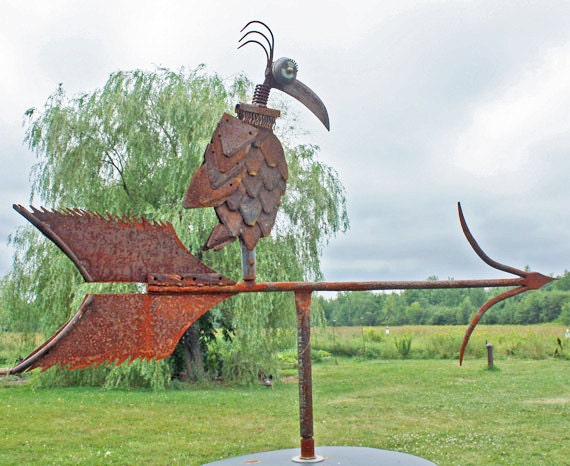
Can Wild Birds Predict the Weather?

Wild Bird Weather Vane
Meteorology is a tricky business. We've all been frustrated by the TV weather man for another dodgy forecast. But long before the MET Office or weather forecasters standing in front of a green screen or broadcasting over the radio, people relied on far less technological means to predict the impending weather. Quite often, this involved observing the behavior of animals and correlating that to the weather that would follow. Cows lying down? Must be a thunderstorm coming. Cats cleaning behind their ears? Might be rain on the way.

More relevant to our purposes, included in many of those observations were birds. For example, an old wives’ tale states that if birds feed during a storm, the rain will continue for a long time – but if they don’t, then the rain will end fairly quickly. But are our feathered weathermen any more reliable than a multi-million pound satellite? But perhaps more specifically, are they reliable at all?

Yes they are - and theses techniques have been around for a lot longer than than the space-age technology we use today.

Most birds have what’s called the Vitali organ, a special middle-ear receptor that can sense extremely small changes in atmospheric pressure. With extreme sensitivity comes equally acute pain reception, so the faster the atmospheric pressure falls (indicating an approaching storm), the more birds that fly low (and the lower they fly) to the ground in an attempt to alleviate the discomfort caused by the pressure change in their ears at higher altitudes. They don’t have to be flying to escape the pain either – if you notice a sudden and sharp increase in activity at your bird feeders or a massing on power lines, there’s probably a good chance that a storm is bearing down on your location. Conversely, if you notice that birds are flying high up in the sky, the weather is most likely clear.

The height at which birds are flying isn’t the only way you can use their actions to try and predict the weather. With a storm approaching, seagulls usually take a break from flying and seek refuge somewhere along the coast to wait the bad weather out. And all kinds of birds usually become very quiet right before it begins to rain.

So while birds may not be able to alert you to tomorrow’s temperature or if there’s going to be a frost overnight, they can still be useful and practical meteorological aids. But as for that old wives’ tale that you can determine the relative length of a period of rain by whether or not birds feed in a storm, there seems to be no hard evidence that either confirms or denies its premise.

Are you a farmer that relies on wild birds to help with your harvesting or crop sewing? Do your garden feeders get busy or quiet during different weather conditions? We'd love to hear from you if you've got a story or scientific evidence that you'd like to share with us.

www.wildbirdfood.uk.com sells high quality, low cost wild bird seed and feeders direct to the UK public from our website and our store in Deeping St James, Peterborough.